17 January 2010

Belajar dari India

Ivan A Hadar | Opini | Kompas | 16 Januari 2010

Menjelang tahun 2010, setiap pejabat negara setingkat menteri serta pemimpin lembaga tinggi negara diberi mobil mewah Toyota Crown Royal Saloon 3.000 cc. Terasa ironis sebab waktu pemberian mobil bertenaga besar dan boros BBM itu nyaris bersamaan dengan pernyataan Presiden Susilo Bambang Yudhoyono bahwa Indonesia bertekad mereduksi emisi karbon hingga 26 persen pada 2020. Juga ironis mengingat tekad pemerintah untuk berhemat.

Menurut Menteri Sekretaris Negara Sudi Silalahi, penggantian mobil dinas seharga 1,3 miliar rupiah per unit itu dianggarkan dalam APBN 2009 sesuai dengan program pemerintah yang telah disetujui DPR periode lalu. Ada dugaan, anggaran mobil dinas itu mungkin diambil dari subsidi pemerintah bagi rakyat miskin. Ya, semacam pelimpahan anggaran, berupa pengurangan subsidi untuk dianggarkan menjadi fasilitas pejabat negara (Kompas, 30/12/2009).

Banyak yang menyesali dan merasa ”kado akhir tahun” untuk para menteri dan pejabat tinggi negara ini melukai rasa keadilan, terutama bagi mereka yang selama ini berkubang dalam kemiskinan. Kenyataannya, masih lebih dari 35 juta rakyat negeri ini tergolong miskin. Penganggur pun masih sangat banyak. Kesenjangan melebar pula, terlihat dari kemerosotan indeks pembangunan manusia (IPM), dari posisi ke-109 (dari 179 negara) pada 2008 menjadi ke-111 pada 2009. Anjloknya IPM menunjukkan bahwa kualitas kesehatan, pendidikan, dan pendapatan per kapita sebuah negara memburuk.

Berbarengan dengan berita itu, wartawan Kompas dalam ”Laporan dari India” menulis keteladanan pemimpin India yang menjadi perekat harmoni sosial. Para pemimpin negeri Mahatma Ghandi ini, termasuk presidennya, tetap menggunakan mobil buatan dalam negeri. Juga tak ada kemegahan kantor-kantor pemerintahan karena yang dipentingkan adalah fungsi (Kompas, 29/12/2009).

Kelompok miskin pedesaan

Pada Pemilu 2009, Partai Kongres India meraih suara terbanyak berkat sebuah program jaminan pekerjaan bagi kelompok miskin pedesaan. Program yang dimulai pada tahun 2005 dengan nama National Rural Employment Guarantee Act 2005 (NREGA) ini memberikan jamin pekerjaan (fisik) kepada semua rumah tangga di daerah pedesaan selama 100 hari per tahun.

Di mancanegara memang terdapat cukup banyak contoh program sejenis. Bedanya, NREGA berangkat dari tingginya kemauan politik pemerintah—berupa jaminan hukum—serta didasari pada kebutuhan riil masyarakat. Panchayat, lembaga pedesaan yang anggotanya dipilih secara demokratis, mengembangkan kerangka pengadaan kerja sehingga dananya tidak jatuh ke tangan pengusaha. Gaji pun diberikan dalam jumlah yang lebih besar dibandingkan dengan rata-rata tingkat gaji di pasar tenaga kerja.

Manfaat program ini sangat dirasakan rakyat miskin pedesaan, yang biasanya terpaksa menerima pekerjaan apa saja dengan tingkat gaji di bawah standar. Dampak positif lain: perbaikan mendasar infrastruktur pedesaan dan berkurangnya arus urbanisasi. Di Negara Bagian Bihar, NREGA berhasil memobilisasi sekitar 44 persen penduduknya (3 juta jiwa) yang berasal dari 7.500 desa untuk menanam lebih dari satu miliar pohon dalam waktu tiga tahun. Sebuah pencapaian puncak yang menjadi rekor dunia.

Program ini mendahulukan mereka yang berada pada strata terbawah orang miskin, terutama lansia, mereka yang cacat, dan janda. Satu kelompok terdiri atas empat keluarga; mereka diwajibkan menanam 200 pohon, termasuk pohon buah-buahan, dan merawatnya selama tiga tahun. Mereka memperoleh gaji ketika pada akhir tahun ketiga 90 persen pohon bertahan hidup. Dalam aturan NREGA, setiap pekerja dibayar 2 dollar AS per hari selama 100 hari dalam satu tahun.

Keberhasilan NREGA adalah membuat Komnas Pengusaha Informal India melakukan penelitian dan mengajukan rekomendasi kepada pemerintah federal untuk menerapkan program sejenis di daerah perkotaan.

Permulaan

Harus diakui, NREGA barulah sebuah permulaan dalam upaya memberantas kemiskinan. Bagi sebuah negara besar seperti India, dan juga Indonesia, persoalan yang dihadapi terbilang kompleks. Namun, arah kebijakan yang jelas adalah sebuah keharusan. Beberapa dasawarsa lalu pembagian pemilikan tanah secara merata menjadi salah satu pekerjaan rumah besar dalam upaya memberantas kemiskinan di pedesaan. Kini persoalannya semakin menjelimet mencakup penerapan jaring pengaman sosial, pemberian akses ke pendidikan, kesehatan, dan perumahan.

Pendidikan dan keterampilan menjadi sangat penting untuk membuka akses bagi penghasilan orang miskin. Menurut Amartya Sen, daripada memacu pertumbuhan makroekonomi, pemerintah sebaiknya memerhatikan persyaratan yang lebih adil terkait pembukaan lapangan kerja dan gaji bagi orang miskin yang dijamin oleh undang-undang.

Seruan penanaman satu miliar pohon per tahun yang disampaikan Presiden Susilo Bambang Yudhoyono baru-baru ini ditanggapi skeptis oleh banyak kalangan. Pengalaman selama ini: imbauan sejenis kurang mangkus. Pemerintah memang selalu mengaku berhasil menanam jutaan pohon, tetapi tidak jelas di mana lokasinya, jenis tanamannya, luas, hingga proses secara keseluruhan.

Sejarah tanam pohon di Indonesia sejak puluhan tahun lalu dianggap sebagai cerita kegagalan. Logikanya, kalau berbagai jenis program tanam pohon berhasil, semestinya tahun ini merupakan waktu panen hasil tanam pohon tahun 2003. Pada waktu itu, sebagian gerakan rehabilitasi hutan dan lahan fokus pada penanaman pohon berumur pendek, seperti sengon.

Seruan penanaman satu miliar pohon juga dituding sebagai politik kamuflase atas kebijakan sektor kehutanan yang eksploitatif. Di satu sisi, Indonesia ingin dicap sebagai negara ramah lingkungan, di sisi lain hutan alam terus dibuka untuk kepentingan industri dan perkebunan.

Menurut data Walhi, berdasarkan rencana tata ruang daerah terakhir, sekitar 17,91 juta hektar hutan sekunder dan primer akan dibuka untuk pembangunan di luar sektor kehutanan. Sementara itu izin pemanfaatan 44 juta hektar kawasan hutan produksi disiapkan dalam tahun 2010-2014.

Tak heran, aktivis lingkungan lebih menyarankan melakukan moratorium penebangan hutan. Idealnya, selain moratorium, tak ada salahnya kita belajar dan menerapkan pengalaman India menggabungkan upaya berantas kemiskinan dan benah infrastruktur pedesaan serta perbaikan lingkungan lewat penanaman satu miliar pohon. Semoga!

IVAN A HADAR Ko-Pemimpin Redaksi Jurnal Sosial Demokrasi Indonesia dan Asia

14 January 2010

Bolshevism and Stalinism

An avalanche of books has recently been published to discredit Lenin, Trotsky and the Russian Revolution. First and foremost of these writers is Professor Robert Service. The aim of his latest book on Trotsky is to prove that Bolshevism leads to Stalinism and totalitarianism. Here Rob Sewell sets the record straight and explains the huge gulf that divided genuine Bolshevism from the monster of Stalinism that was built on the physical destruction of the Bolshevik party

by Rob Sewell | In Defense of Marxism | 13 January 2010

The history of the Russian Revolution is intimately associated with the names of Lenin and Trotsky, its two great leaders. They attracted all the praise and they bore all the hatred. The reason for this is not difficult to understand. The October Russian Revolution, led by the Bolshevik Party, was the greatest event in history. For the first time, the workers and peasant took power into their hands, swept aside the landlords and capitalists, and proceeded to organise a democratic workers’ Soviet Republic. The authority of the new Soviet government rested upon a congress of soviets (workers’ committees) elected from factories and barracks.
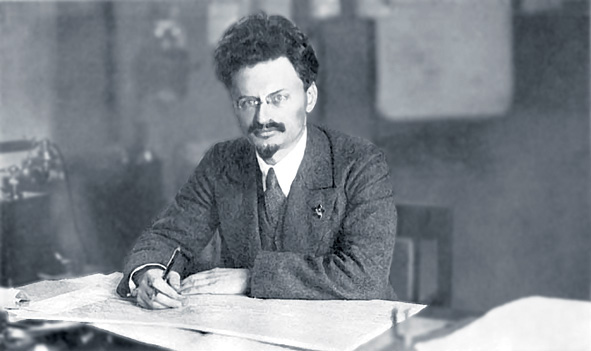
Leon Trotsky

Leon TrotskyLeon Trotsky, who was a political giant, built and led the Red Army from scratch. After Lenin’s death, it was Trotsky who led the struggle against Stalinism, for which he paid the ultimate price by his murder in 1940 at the hands of a Stalinist agent.

Over the recent period there has been an avalanche of books published to discredit Lenin, Trotsky and the Russian Revolution. First and foremost of these writers is Professor Robert Service, the author of several books, including one on Lenin and another on Stalin.

His latest book is a biography of Trotsky, which is an attempt to link all three figures and bind them to the crimes of Stalin. This amalgam is not a new method. Its aim is to prove that Bolshevism leads to Stalinism and totalitarianism and must be condemned in equal measure.

Anti-Communism

Professor Service comes from that breed of historians and intellectuals whose stock in trade is anti-communism. The task of these well-paid academics is to discredit Marxism, communism and revolution in general. Despite all the talk of “objectivity”, Service’s latest book contains nothing that is original, and is a rehash of all the old slanders and gossip against Leon Trotsky, one of the greatest revolutionary figures in history.

Robert Service dismisses Trotsky’s own autobiography, ‘My Life’, as well as the sympathetic and highly acclaimed biographies written by Isaac Deutscher and Pierre Broué, which contain, according to him, “highly disputable judgements”. Service wishes to “correct” these judgements with his own twisted conclusions.

Service is incapable of understanding history through the interaction of leaders, parties, classes and groups. He superficially reduces the historic struggle between Trotsky and Stalin as a personal or even psychological struggle, devoid of any class content or interests. “Stalin outplayed him. Trotsky did not go down to defeat at the hands of ‘the bureaucracy’: he lost to a man and a clique with a superior understanding of Soviet public life.” (p.4). This is to reduce historical events to trivia. Trotsky’s defeat is explained simply by personal failings and not by objective forces.

Liberal dilettantes, such as our learned professor, have never been able to understand revolutions or counter-revolutions. For them, such episodes are “excesses” or “accidents” that have deviated from the “normal” course of history. However, a revolution does not simply fall from the skies. Liberal bourgeois thought is incapable of understanding the movement of the masses and those who put themselves on the standpoint of the working class, as in the case of Lenin and Trotsky. Service could never understand Trotsky or what motivated him, his strengths and weaknesses. His motivation is simply to discredit Trotsky and the ideas he represents.

We are forced to leave aside every calumny thrown against Lenin and Trotsky, as these would require a book to answer. We have chosen to concentrate on the key questions raised by Service. According to the Professor, “Without Lenin, furthermore, Stalinism in the Soviet Union would have been impossible...” (Lenin: A Political Life, vol.3, p.xix). This is the crux of the matter. Were Lenin’s and Trotsky’s methods in essence no different from those of Stalin? Does Bolshevism lead to Stalinism? What was the struggle between Trotsky and Stalin all about?

The answers to these questions cannot be found in individual traits or personal combinations, although they play a certain role, but in the complex relationships between classes and different social layers and the objective conditions that predominate at the time.

Lenin’s and Trotsky’s lives were bound up with the revolutionary struggles of their age: the fight against tsarism, the development of Russian Marxism, the 1905 Revolution, exile, the war years, the revolutions of 1917, the conquest of power, and the founding of the Communist International. Trotsky lived on in the fight against Stalinism and the preparation for a new revolutionary international.

Revolutionary Struggle

In his outstanding autobiography, ‘My Life’, Trotsky explained “Thus I know well enough, from my own experience, the historical ebb and flow. They are governed by their own laws. Mere impatience will not expedite their change. I have grown accustomed to viewing the historical perspective not from the standpoint of my personal fate. To understand the causal sequence of events and to find somewhere in the sequence one’s own place – that is the first duty of a revolutionary. And at the same time it is the greatest personal satisfaction possible for a man who does not limit his tasks to the present day.”

Trotsky’s fall from power after Lenin’s death did not represent personal ineptitude but the changed relation of class forces in Russia and internationally. The victory of Stalin reflected the isolation of the revolution in a backward country, surrounded by hostile forces.

In Robert Service’s account of October, which he typically regards as a “coup”, there is one essential ingredient missing – the role of the masses on which the revolution is based. In the aftermath of the revolution, Service concludes “Most people in Russia and the rest of the world regarded the Bolshevik leadership as a gang of wild incompetents who could never sustain themselves in power.” (Service, Trotsky, A Biography, p.189). This is the view of the ruling classes, which Service takes as representing “most people”, but certainly not of the international working class which rallied to the cause of the Russian Revolution.

“Bolshevism,” explained Victor Serge, “is the unity of word and deed. Lenin’s entire merit consists in his will to carry out his programme... Land to the peasants, factories to the working class, power to those who toil. These words have often been spoken, but no one has ever thought seriously of passing from theory to practice.” (From Lenin to Stalin)

This was the essence of the revolution. In the civil war and imperialist intervention, the main aim of the imperialists was the violent overthrow of the revolutionary government and the murder of its leaders. In August 1918, a Social Revolutionary (member of the peasant party) shot and nearly fatally wounded Lenin. Trotsky was also the target of repeated assassination attempts by the White generals.

The first Soviet Constitution guaranteed every freedom for the workers. There was no thought whatsoever of a totalitarian state. All political parties, including the capitalist parties, were free to operate, accept for the fascist Black Hundreds. There was complete freedom of discussion and debate within the Communist Party. On the issue of the Brest-Litovsk proposals to sign a predatory peace treaty with Germany in 1918, for instance, Lenin was in a minority. He put forward the proposal that every group of citizens supported by 10,000 – 15,000 workers should have to right to issue their own paper if they wanted, the only way to democratise the press.

The October Revolution was largely a peaceful affair. “Hardly anyone was arrested”, noted Serge, “and those who were, were soon released. Among these were Krasnov, Ataman of the Cossacks, who took advantage of our leniency to start a civil war in the Don country – and Purishkievich, the anti-Semite leader.” (Ibid) The revolution was still very naive. As soon as these reactionaries were released they immediately took up arms against the workers’ state.

The first Soviet government was a coalition between Bolsheviks and Left Social Revolutionaries, a left wing split off from the Social Revolutionaries. This only came to an end when the Left SRs joined the Mensheviks and other counter-revolutionaries, and took up arms against the government. Only after the summer of 1918 did the revolution hit back in self-defence. Trotsky organised the Red Army in order to defend the revolution.
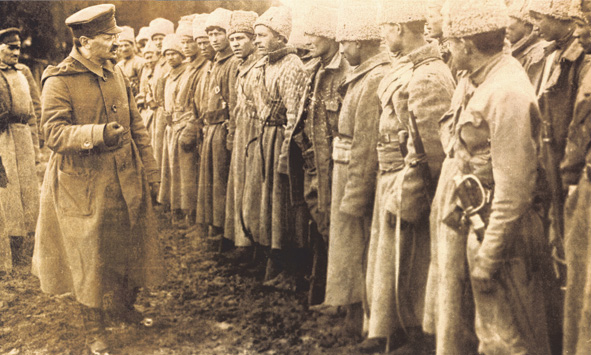
Leon Trotsky addresses Red Army troops during the Civil War, 1918

Leon Trotsky addresses Red Army troops during the Civil War, 1918“Lenin and Trotsky had become the Siamese twins of Russian politics”, states Service, “being joined at the hip in their determination to use ruthless measures including state terror against enemies.” (Trotsky, a biography, p.190). However, in a situation of civil war and imperialist intervention to overthrow the Soviet government, what were they to do, simply fold their arms and pray the counter-revolution would go away?

The counter-revolutionary White forces, backed by 21 foreign armies, took most of the country and carried out wide-scale atrocities against the workers and peasants. At one stage, the Soviet government only controlled Moscow and the surrounding area. The fate of the revolution was hanging by a thread. Trotsky succeeded in turning the situation around, but at enormous cost. War production and famine necessitated rationing in the cities and requisitioning in the countryside. This is the period of “war communism”, where everything was directed unavoidably to the war effort and military defence of the Soviet Republic.

Kronstadt Mutiny

This served to stretch things to the absolute limit. Relations between the peasants and the workers, the cornerstone of the revolution, reached breaking point. Peasant uprisings broke out in 1920 and early 1921. At this time the Soviet government was faced with a naval mutiny in Kronstadt. They had no alternative after negotiations broke down but to crush the rebellion. Failure to do so would have opened the door to military intervention against Petrograd. These Kronstadt sailors were not the same revolutionary sailors of October 1917, but new peasant conscripts under the influence of the counter-revolution. With the end of the civil war, the New Economic Policy was introduced to placate the peasants, allowing them to sell their surplus produce, which succeeded in bringing stability to the countryside.

In this life or death situation, the Bolsheviks had no alternative but to take emergency defensive measures. Incidentally, the same was true of Cromwell’s actions in defence of the English revolution against the Royalist reaction, or Robespierre’s defence of the French revolution against the feudal regime, or the measures of the Northern states against the slave-owning owners in the American civil war. “A party which had seemed doomed to defeat in mid-1918 triumphed by dint of determination, organisation and leadership”, admits Service. (Trotsky, a biography, p.245). But then goes on to attack such measures as “ruthless” and “terror against its enemies”.

The overthrow of the Soviet government would not have brought with it liberal democracy, but the military fascist dictatorship of the White generals. That was the alternative to Soviet power that the imperialists desired.

The Bolsheviks, while defending the revolution at all costs, never believed the revolution could be sustained for any length of time in a backward country like Russia. The fate of the Soviet regime depended upon the world revolution. Lenin believed that if the isolation was not broken, the Russian revolution would be doomed. He was prepared to sacrifice everything for a successful revolution in Germany. The only thing they could do was to hold on as long as possible until help arrived from the west. As we saw, the revolution did not collapse as Lenin had feared, but suffered a bureaucratic degeneration in the form of Stalinism.

Stalinism – the opposite of Bolshevism – grew precisely out of these objective conditions of isolation and terrible backwardness. After the civil war, the economy was completely shattered. The country was ruined and subject to famine and disease. The working class had become atomised. “The terrible crises and the closing down of factories have compelled people to flee from starvation”, wrote Lenin. “The workers have simply abandoned their factories; they have had to settle down in the country and have ceased to be workers.” (Collected Works, vol.32, p.199)

The introduction of the New Economic Policy in 1921 was a retreat, which gave concessions to the market. It saw the revival of capitalism in Russia, together with the merchant, petty employer, rich peasant and black marketer. This went hand in hand with the growth of bureaucratism in industry, the state and even the Bolshevik Party. Stalin, who was a secondary figure in the revolution, became the spokesman for this new social layer that was elbowing aside the working class.

State Apparatus

“Our state apparatus is so deplorable, not to say wretched, that we must think very carefully how to combat its defects”, complained Lenin. (Collected Works, vol.33, p.487). Things became so bad that Lenin and Trotsky formed a bloc in 1922 to fight the menace of bureaucracy. This struggle led to Lenin breaking off all personal relations with Stalin. Lenin stated he was preparing a “bomb” against Stalin. Finally, in his last ‘Testament’ Lenin recommended the Stalin be removed as General Secretary of the Communist Party and recommended Trotsky “as the most able man on the Central Committee”.

The wishes of Lenin’s Testament were not carried out due to the personal intrigues of both Kamenev and Zinoviev, who had made a rotten pact with Stalin to keep Trotsky out of power. Here we see the pernicious role of spite in politics and its unforeseen consequences.

Lenin’s death in January 1924 coincided with the defeat of the German revolution, which provided a double blow to the morale of the Russian workers. At this time, only one percent of the members of the Bolshevik Party had held a party card before March 1917. Many of the advance workers and communists had perished in the civil war. After these blows, through the agency of Stalin, the bureaucracy took control of the party and state apparatus. The weight of the Nepmen (petty capitalists created by the New Economic Policy) and kulaks (rich peasants) grew exponentially. The pressure of these hostile class forces fed into the party through the rising bureaucracy.

In late 1924, Stalin came forward with his anti-Marxist theory of ‘Socialism in one country’, which reflected the conservative outlook of the bureaucracy. This represented a complete break with the perspective of world revolution as put forward by Lenin. It also coincided with a campaign to discredit Trotsky who had established a Left Opposition in 1923 to restore party democracy.

Trotsky defended the position of revolutionary Marxism against the growing revisionism of Stalin. While Trotsky’s support rested upon the revolutionary workers, Stalin’s was based upon the bureaucratic reaction, the millions of petty officials, former tsarist functionaries, tsarist officers, bourgeois intellectuals, and so forth, who made their living in the apparatus of state, industry and party. Stalin became the “chief” of this caste, which now had its own material interests to defend. In 1926, when Lenin’s widow Krupskaya was close to the Opposition, she stated “If Lenin were alive today he would now be in prison.”

“Whoever understands history even slightly knows that every revolution has provoked a subsequent counter-revolution which, to be sure, has never completely thrown the nation all the way back to its starting point in the sphere of the economy but has always taken from the people a considerable part, sometimes the lion’s share, of its political conquests”, explained Trotsky. “And the first victim of the reactionary wave as a general rule is that layer of revolutionaries which stood at the head of the masses in the first period of the revolution, the period of the offensive, the ‘heroic’ period. This general historical observation should lead us to the idea that the matter is not simply one of the skill, the cunning, or the art of two or a few individuals, but of incomparably more profound causes.” (Trotsky - Writings 1935-36, p.171)

Stalin’s Revisionism

The years of hardship and defeat had borne down heavily upon the Russian masses. As the bureaucrats grew in power and insolence, the voice of the revolutionary workers became weaker. While the Bolshevik-Leninists around Trotsky drew to their banner tens of thousands of the best revolutionary fighters, and gathered sympathy from the advanced workers, this sympathy remained passive. They were exhausted and only a victory internationally could have stirred them into life. Meanwhile, the Stalinist bureaucracy railed against “permanent revolution” internationally and unnecessary upheaval at home. “We will build the socialist society in Russia!” they proclaimed. This found an echo in the weary and backward masses, which served to isolate the Bolshevik vanguard. “Therein lies the secret of the victory of the bureaucracy”, explained Trotsky. “Power is not a prize which the most ‘skilful’ win. Power is a relationship between individuals, in the last analysis between classes.” (Ibid, pp.176-77).

Dominant Position

Stalin used his dominant position to expel and exile Trotsky from the Soviet Union. By the mid-1930s, despite all the capitulations of former oppositionists around Zinoviev and Kamenev, Stalin decided to eliminate physically all those connected with the October revolution. The developing revolution in Spain was threatening to rekindle the enthusiasm of the Russian masses. This would have sounded the death-knell of the bureaucracy. As a result, Stalin waged a one-sided civil war against the Old Bolsheviks. This culminated in the purge trials of 1936-8, where those associated with October were physically eliminated. Millions perished in the camps and cellars of the secret police. For those who say, as Service does, that Bolshevism leads to Stalinism, we say that on the contrary, a river of blood separated Stalinism and Bolshevism.

The only way Stalinism could consolidate its rule was over the corpses of those communists and Trotskyists who remained true to the ideals of October. Trotsky fought Stalinism to the death. He refused to capitulate, as this would only serve to discredit the ideas of Marxism. Trotsky paid for this with his life.

Clean Banner

Despite all the terrible odds, and the murder of his close family and collaborators, Trotsky continued to defend the clean banner of Marx and Lenin against the horrors of Stalinism right up to the bitter end. The likes of Professor Service are repelled by this. Even Deutscher failed to understand the real Trotsky, believing he should simply concentrate on writing and not bother himself with organising the forces of a new revolutionary international. However, Trotsky regarded this task as the most important work of his entire life.

Despite the death of Trotsky, his ideas live on. The collapse of Stalinism, which he predicted, and the global crisis of capitalism, will once again make these ideas the most attractive ideas in the world.

“Time was when Trotsky was a frequent topic of public discussion at least outside the USSR. Those days are gone”, states Service. However, in today’s crisis, things are changing. There is a renewed interest in Lenin, Trotsky and their ideas. It is for this reason that Service has published his books. But they will have little effect.

We should study Trotsky’s writings, alongside other great teachers of Marxism, which are a treasure house of experience and theory. With these, the new generation can find the way forward in the eventual overthrow of capitalism and the establishment of world socialism. As for the likes of Professor Service, in the words of the Bible, let the dead bury the dead.

13 January 2010

Demokrasi dan Suara Belalang

KOMPAS cetak - Demokrasi dan Suara Belalang

Senin, 11 Januari 2010 | 03:23 WIB

Antonius Cahyadi

”So, is there life after democracy? & hellip; The question here, really, is what have we done to democracy? What have we turned it into? What happens once democracy has been used up? When it has been hollowed out and emptied of meaning?”

(Arundhati Roy, Listening to Grasshoppers, Field Notes on Democracy).

Di hampir pengujung akhir tahun 2009, Arundhati Roy menerbitkan buku yang merupakan kumpulan esainya tentang demokrasi. Judul bukunya, Listening to Grasshoppers, Field Notes on Democracy. Salah satu esai dalam buku itu yang berjudul sama dibawakan di Istanbul, 18 Januari 2008, untuk memperingati kematian Hrant Dink, jurnalis Armenia yang dibunuh di Istanbul, Januari 2007, karena mencoba mengungkap tragedi yang dialami orang-orang Kristen Armenia pada masa kekaisaran Ottoman tahun 1915.

Di bagian lain bukunya, Roy menggambarkan bagaimana perjuangan orang-orang Kashmir, tergambar lewat civil disobedience pada tahun 2008, memperoleh tekanan yang begitu berat dan sistematik. India berhadapan dengan Muslim Kashmir.

Dalam catatan Roy, demokrasi seperti kehabisan dayanya ketika berhadapan dengan fakta pluralitas masyarakat negara yang diformanya, lebih-lebih ketika demokrasi berhadapan dengan agama. Pemilihan umum untuk memilih wakil rakyat dan kepala pemerintahan menjadi tolok ukur yang banal atas demokrasi. Demokrasi justru menjadi alat untuk mematikan suara rakyat (vox populi). Suara demokrasi justru menjadi suara kerumunan belalang yang menandakan akan adanya bencana. Persis ketika setelah ibunda Hrant Dink yang di tahun 1915 berusia 10 tahun mendengar suara kerumunan belalang di desanya, Dubne, tragedi pembantaian di Armenia itu terjadi. Maka, Roy bertanya dengan memetaforakan suara belalang dan bencana. Adakah kehidupan setelah democracy (yang bagi Roy telah menjadi demon-crazy)?

Kecemasan

Demokrasi memberikan harapan kepada masyarakat manusia yang terbentuk dalam sebuah negara karena pemerintahan negara dijamin dilakukan oleh rakyat. Makna rakyat yang pada zaman pencerahan kemudian diidealisasi sebagai individu yang memiliki otonomitas dan kedirian, atau manusia sebagai subyek, dikawal oleh hukum. Hukum menjamin warga negara berpartisipasi dalam pengelolaan negara. Warga negara oleh demokrasi dan hukum dipandang sebagai subyek yang bermartabat.

Namun, cita dari demokrasi semacam itu yang tidak ditemukan oleh Roy dalam demokrasi riil. Demokrasi dengan hukum formalnya menjadi demokrasi performatif yang sekadar mementingkan penampilan fisik semata dalam pemilu yang seakan-akan ”jurdil” dan pers yang seolah-olah merdeka. Hukum yang memang pada dirinya berorientasi ketertiban menjadi alat untuk melegitimasi adanya demokrasi performatif.

Demokrasi dan hukum zaman pencerahan yang diadopsi oleh negara memiliki persoalan. Bagaimana meletakkan kemanusiaan (manusia sebagai subyek yang otonom) yang baru saja lahir berhadapan dengan negara? Trauma Revolusi Perancis membuat ruang publik sebagai domain keberadaan negara disterilkan dan dinetralkan dari agama (berikut religiositas yang ikut membentuk kemanusiaan kita). Dalam perjalanan waktu, negara melalui demokrasi dan hukum menyingkirkan kemanusiaan. Negara tidak dapat hidup berdampingan dengan kemanusiaan dalam ruang publik yang seharusnya dijaga oleh demokrasi dan hukum.

Apabila Roy menyaksikan negara India lewat demokrasi dan hukum yang diisi oleh nasionalisme Hindu dan developmentalism yang pro-pasar sehingga menyingkirkan kaum Muslim, Kristen, Sikh, dan Dalits, kita melihat bahwa di masa Orde Baru demokrasi Pancasila menyingkirkan orang-orang kiri, kaum penghayat, dan orang-orang kritis. Ironisnya, negara Orde Baru melakukan itu seperti seolah-olah menjawab tantangan pencerahan dengan menyakralkan ruang publik. Pancasila yang maknanya begitu dipersempit menjadi kanal untuk meletakkan kemanusiaan bersandingan dengan negara.

Harapan

Runtuhnya sosialisme sebagai ideologi negara, tragedi 11 September, serangan di Mumbai, dan—untuk kita—reformasi, sebenarnya menjadi momen-momen untuk kembali mempertemukan negara dan kemanusiaan dalam ruang publik yang dijaga oleh demokrasi dan hukum. Momen-momen itu juga sekaligus menandakan bahwa negara tidak lagi bisa dibayangkan sebagai sebuah entitas yang absolut. Negara oleh masyarakat manusia yang menjadi rahim kelahirannya ditantang untuk melihat manusia sebagai subyek yang menghidupinya dalam peristiwa sehari-hari yang begitu sederhana.

Skandal Bank Century yang terungkap, koin untuk Prita, dan banyak fenomena people power lainnya merupakan manifestasi gugatan terhadap kekuasaan absolut negara. Di sisi lain, kasus bunuh diri yang beberapa kali kita saksikan merupakan tanda bahwa ruang publik kita tidaklah semanusiawi yang kita bayangkan selama ini. Negara dengan mekanisme pasarnya telah begitu beringas mengonsumsi kemanusiaan kita sebagai subyek otonom yang dicita-citakan.

Lewat peristiwa dalam hidup keseharian kita, misalnya yang termanifestasi dalam jejaring sosial virtual yang kita miliki, negara diingatkan untuk kembali mendengarkan vox populi sebagai suara rakyat. Dalam suara rakyat terkandung suara kemanusiaan yang mencari jalannya untuk didengarkan. Seperti suara kerumunan belalang, suara rakyat ingin memberitahukan sesuatu kepada negara tentang kemanusiaan di ruang publik yang seharusnya dijaga oleh negara dengan demokrasi dan hukum.

Antonius Cahyadi Dosen Fakultas Hukum Universitas Indonesia; Kandidat Doktor dalam Bidang Socio Legal Studies di Van Vollenhoven Institute, Faculteit der Rechtgeleerdheid, Universitas Leiden, Belanda

14 August 2008

Fixing the Hole - Mulai Dari Mana?

Awicaks
Di depan mata terhampar bentangan luas lahan kosong. Seperti tak berujung, dan rasanya matahari di atas kepala ada tiga. Panas luar biasa. Suhu panas juga disebabkan proses pengeringan gambut yang melepaskan jutaan ton karbondioksida (CO2). Sudah dua jam perjalanan, dan sepertinya tidak berujung.

"Dulu di sini adalah hamparan hutan. Dalam waktu kurang dari setahun hutan di sini dibersihkan, karena perusahaan sudah dapat HGU (Hak Guna Usaha) untuk memulai membangun kebun kelapa sawit." Ujar kawan yang menemani saya.

Itu perjalanan sebulan lalu di salah satu kawasan kaya karbon di Riau. Dan pemandangan yang saya lihat tadi hanya puncak dari gunung es. Riau adalah wilayah yang sudah luluh lantak oleh perkebunan besar tidak hanya akhir-akhir ini, bahkan sudah sejak abad ke-18, padsa masa pendudukan Belanda. Yang mengenaskan, keadaan dan modus operandi yang ada sekarang tidak berbeda dengan yang dilakukan pada masa pendudukan Belanda itu.

Sejalan dengan agresifitas pertumbuhan modal-modal besar, seluruh operasi yang "memakan" hutan pun berlangsung semakin efektif dan harus efisien. Atas nama batas-laba (profit margin) metoda pembukaan hutan dan penyiapan lahan paling murah pun dipilih: Membakar sisa-sisa hutan yang ditebang.

Tahun 1997 Riau merupakan salah satu wilayah yang paling mengenaskan dilanda bencana asap. Ratusan anak-anak menderita infeksi saluran pernapasan bagian atas (ISPA). Sarwono Kusumaatmadja, yang saat itu menjabat Menteri Lingkungan Hidup, tergerak untuk melakukan kerja-kerja di luar batas kewenangannya. Ia begitu tak sabar melihat ketidakpedulian kantor negara yang mestinya bertanggung jawab, seperti Departemen Kehutanan dan pemerintah daerah setempat.

Kebakaran lahan hutan tahun 1997 memang bukan yang terbesar, ada pula kebakaran tahun 1982 yang tak kalah hebat, dan sama-sama dibarengi dengan masa gelombang panas (El Nino). Akibatnya derita warga bertumpuk. Sudah terkena bencana asap, lalu mengalami pula kekeringan.

Di media massa para pejabat tak malu-malu menuding masyarakat sebagai penyulut kebakaran. "Mereka miskin, tak punya pilihan selain membakar hutan demi hidup." Sebuah ungkapan paling tolol yang pernah saya dengar. Sudut pandang sepihak dengan sikap lepas tanggung jawab merupakan ciri khas paling menonjol dari pejabat publik di negara ini.

Kebakaran 1997 yang melanda Sumatra dan Kalimantan itu menjadi penanda dari ambruknya rejim korup Orde Baru. Tak lama, setelah diselenggarakan pemilihan umum a la Orde Baru yang kembali mengantarkan Suharto menjadi presiden untuk kesekian kalinya, Sarwono pun tak tergusur dari jajaran elit Orde Baru. Yang menarik, itulah awal dari runtuhnya kepongahan Orde Baru Suharto.

Setelah Orde Baru tumbang, pada masa reformasi, kebakaran hutan menjadi prioritas penting rejim berikutnya. Namun, alih-alih menyelesaikan krisis, kebakaran hutan justru menjadi kerangka acuan (Terms of Reference, ToR) baru pengembangan proyek-proyek milyaran rupiah, baik yang berasal dari bantuan (tak gratis) negara-negara maju maupun proyek utang luar negeri. Ini memang ciri negeri amburadul ini. Krisis dipecahkan lewat proyek. Krisis tak selesai, pengelola proyek makin kaya!

Yang jelas bencana asap menjadi pemicu ucapan permintaan maaf setiap presiden yang berkuasa sejak Suharto kepada negara-negara tetangga, terutama Malaysia dan Singapura. ASEAN pun tergerak merumuskan sebuah perjanjian kerjasama penangangan bencana asap. Selesaikah krisis? Lagi-lagi ia hanya melahirkan proyek-proyek baru....

"Harusnya pemerintah Malaysia minta maaf kepada kita karena tak mampu mengontrol para pemodal mereka yang berinvestasi di perkebunan kelapa sawit di Sumatra dan Kalimantan," ujar seorang pejabat publik dari Departemen Kehutanan pada masa kepresidenan Megawati. Buruk rupa cermin dibelah!

Mungkin mudah bagi saya menulis, utamakan keselamatan warga dalam kebijakan-kebijakan publik! Tetapi dengan carut-marut struktur dan karakter pengurusan negara macam begini, ktia mesti mulai dari mana? Tanpa pemimpin-pemimpin bernyali, nothing to lose, warga Indonesia tak mungkin keluar dari lingkaran setan krisis. Percayalah!


10 June 2008

The Economist's Tale

Ini bukan buku baru. Bahkan saya menemukannya di lemari arsip Zed Publisher. Petugas di Zed harus menmeriksa basis data di komputer apakah mereka bisa melepas buku ini untuk dijual. Setelah yakin bahwa mereka masih memiliki salinan lain, saya diperbolehkan membelinya. Pantang menyerah, saya minta potongan harga, karena buku ini sudah masuk arsip. Si petugas tertawa, "Nice try. I'll take a look whether you can get a discount or not." Ia pun mengecek ke komputernya kembali. "Okay, you can get 30% discount."

Sekali lagi, ini bukan buku baru. Diterbitkan pertama kali tahun 2003. Buku yang ditulis Peter Griffiths ini pun tidak menawarkan perspektif baru. Meski bercerita tentang hal yang sama, bahkan terbit lebih dulu, buku bertajuk "The Economist's Tale" ini tidak seberhasil buku John Perkins, "Confession of the Economic Hitman." Tetapi yang menarik dari "the Economist's Tale", ia menggunakan pendekatan bertutur, dan beropini secara jujur. Tidak ada teori-teori besar, atau kerangka ekonomi-poltik hegemonik seperti yang ditawarkan buku-buku serupa.

Buku ini lebih tepat disebut gerundelan seorang konsultan kebijakan pangan yang bekerja di Seirra Leone bernama Griffiths, yang merasa tidak nyaman karena kajian keahliannya digunakan secara "keliru" oleh Bank Dunia untuk mendorong perekonomian Sierra Leone lewat kebijakan produksi beras. Anda akan kecewa jika berharap memperoleh bahasan teknikal tentang ekonomi pangan. Anda pun tidak akan dirundung rasa tertekan membaca kejumawaan Bank Dunia dalam mendikte pengurus Negara Sierra Leone. Anda justru akan banyak tertawa, meski pahit, membaca tuturan Griffiths dengan kalimat-kalimat yang cerdas mengejek dirinya sendiri, mengejek kesoktahuan para penentu kebijakan di Bank Dunia tentang situasi ekonomi-politik Sierra Leone.

Yang membuat saya tercekat adalah, ketika menemukan bahwa rute camput-tangan kebijakan yang dilakukan Bank Dunia di Sierra Leone serupa dan sebangun dengan yang mereka lakukan di Indonesia. Dengan kondisi geografik yang berbeda, dengan latar sejarah berbeda, apalagi latar sosial-politik dan ekonomi-politik yang jauh dari sama, Bank Dunia memberlakukan resep yang plek sama antara Sierra Leone dengan Indonesia. Penghapusan subsidi atas bahan-bahan kebutuhan pokok, percepatan privatisasi, pembanjiran utang untuk mendongkrak anggaran rutin kepengurusan Negara, dan sebagainya. Ya ampun! Terlepas dari gaya bertuturnya yang lucu dan ringan, di balik itu saya tidak menemukan perbedaan antara kisah lucu nan pahit di Sierra Leone dengan Indonesia.

Griffiths berhasil memaparkan pengalamannya seperti halnya orang mendongeng. Ia sangat berhati-hati ketika menyisipkan kajian teknikalnya dan meletakkannya sebagai pendapat pribadi terhadap campur-tangan kebijakan Bank Dunia dan Dana Moneter Internasional (IMF), yang menurut penilaiannya absurd.

Sebagai sebuah dongeng yang lucu dan ringan, buku ini justru sangat menakutkan.
.

17 May 2008

Pemilu Sembilan Bulan? Sinting!

Saya baru tersadar ketika tahu bahwa masa kampanye pemilihan umum tahun depan bisa memakan waktu sembilan bulan. Saya cuma geleng-geleng kepala. Apa isi kepala orang-orang sekolahan yang disewa untuk merumuskan peraturan perundangan ini? Kalau isi kepala para politikus sih saya sama sekali tidak tertarik untuk tahu, karena sudah terbaca dari perilaku dan biaya kelakuan mereka.

Coba mari telusuri berita-berita media sepanjang dua tahun terakhir. Mari perhatian kita pusatkan ke konflik-konflik yang timbul karena pemilihan kepala daerah (pilkada). Bentrokan antarmassa pendukung jelas tak terhindarkan, belum lagi ketidakpastian hukum karena pasti pihak yang tak terima atas kekalahan mereka akan mondar-mandir ke lembaga peradilan, entah itu Mahkamah Agung atau Mahkamah Konstitusi. Tambal sulam dan bengkel bongkar pasang jelas tak terhindarkan. Belum pula dihitung perdebatan-perdebatan di media massa diantara orang-orang sekolahan yang menjadi pengamat politik, serta para pelaku politik itu sendiri. Apalagi jika kita sudah bicara soal biaya. Baik biaya resmi maupun biaya-biaya silumannya. Dimana otak orang-orang itu?

Rasanya potret derita warga yang tak henti-hentinya diwartakan media massa tak mampu menyentuh syaraf dan sel-sel kelabu otak mereka. Ini negara mau dibawa kemana? Sudah porak poranda ekonominya, korup orang-orangnya, lah kok masih mau bermain-main dengan eksperimen politik yang lama, mahal (baik biaya moneter maupun biaya sosial dan politik). Saya pun bingung, kok tidak ada aktivis organiasi masyarakat sipil yang protes. Jangan-jangan mereka pun tergiur untuk ikut cawe-cawe di eksperimen paling gila ini?

Benar-benar edan!

12 May 2008

Berkunjung ke the Corner House

Larry Lohmann dan Nick Hildyard kelihatan begitu bersemangat ketika mereka muncul di gerbang Stasiun Kereta Api Gillingham, Dorset, Jumat sore lalu. Saya yang masih kelelahan setelah pertemuan marathon di kantor Unilever di London, dilanjutkan dengan konsolidasi di kantor Greenpeace Inggris, kemudian lanjut dengan perjalanan kereta api dua jam hingga tiba di Gillingham, hanya bisa menyambut rangkulan hangat keduanya. Dengan Larry saya masih lumayan sering bertemu dibanding Nick. Terakhir kami sama-sama hadir dan aktif di lokakarya Durban Group beberapa hari sebelum Konferensi Perubahan Iklim di Bali dimulai, Desember 2007. Sedangkan Nick, terakhir saya bersama-sama dengan dia kira-kira tahun 2001, di Canada. Dan kunjungan ke kantor mereka, the Corner House, adalah yang pertama buat saya. Masih setengah jam lagi untuk mencapai kantor the Corner House yang melegenda itu di Sturminster Newton, Dorset, dari Stasiun Kereta Api Gillingham.

Kami menyempatkan kongkow di sebuah kedai minum pedesaan, di pinggiran kota Sturminster Newton. Udaranya sejuk, meski sinar matahari cukup menyengat sore itu. Tak lama setelah mendapat meja, yang pertama kali saya lakukan adalah memberi Nick rokok Ji-Sam-Soe, yang ia pesan lewat email. Bahagia sekali dia. Kami duduk di bagian belakang cafe, yang disebut smoking patio.

Larry bercerita tentang roadshow buku terakhirnya, Carbon Trading - Critical Conversation, selama dua bulan di sepanjang Amerika Utara, yang berakhir Februari lalu. Sementara berkisah tentang kemenangan kasus mereka melawan Pemerintah Inggris, terkait korupsi dalam perjanjian perdagangan senjata antara BAE System dengan Saudi Arabia. Meski itu adalah kemenangan besar buat the Corner House dan publik Inggris, tindak lanjut proses hukum oleh Pemerintah Inggris dinilai Nick dan Larry penuh dengan muslihat. Terkejut juga saya mendengarnya. Kok seperti di Indonesia ya?

Larry Lohmann adalah salah seorang pemikir dan penulis yang produktif yang tak lelah membuka mata para akademisi, aktivis serta para internasionalis tentang ketidakadilan global yang semakin hari semakin membahayakan. Hal yang paling dikhawatirkan Larry adalah, proses pembalikan alami, dimana di masa lalu bangsa Eropa begitu agresif menjajah dunia ketiga, di Asia, Afrika dan Pasifik, kini gelombang bangsa Asia, Afrika dan Pasifik ke negara-negara Eropa menjadi semacam karma. Yang jadi persoalan, gelombang aliran populasi itu tak pelak menimbulkan ketegangan sosial, yang membuat rasisme menjadi semakin nyata. Di sela ngobrol di kedai kopi di seberang the Corner House, saya menanyakan, apakah dia sadar bahwa tempat dia tinggal ternyata semuanya kulit putih. Sehingga saya sering kagok ketika memasuki tempat-tempat publik diikuti pandangan mata heran orang-orang di sekitar. Larry hanya tersenyum simpul.